EC-05

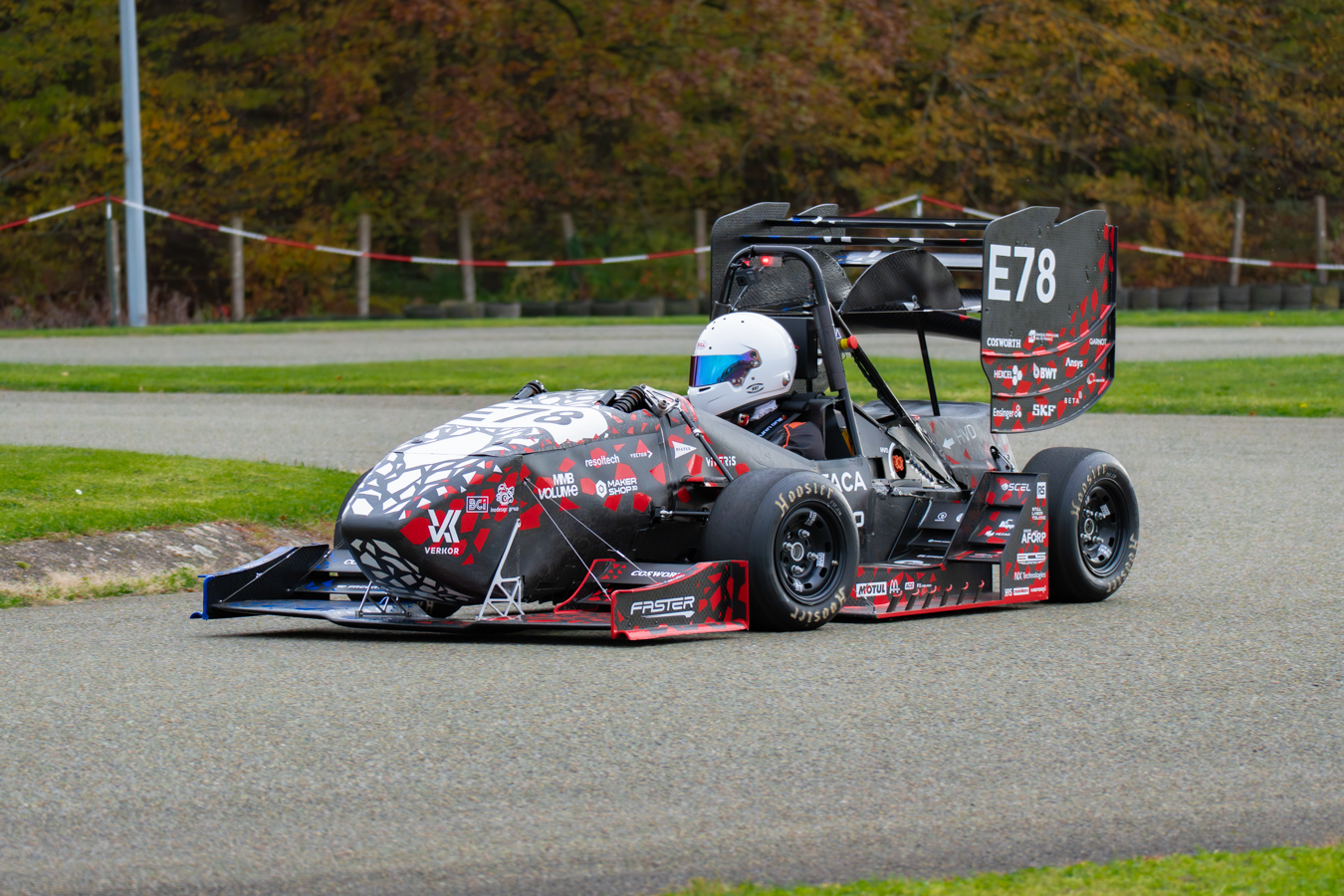
Our first 100% electric single-seater

Power
0 kW
0-100 km/h
0 s
Torque
0 Nm
Weight
0 kg

HV Battery

The real challenge of this technological shift lies in energy storage and delivery. Our battery pack was custom-designed to meet the extreme demands of the competition. Consisting of 720 cells, it boasts a capacity of 7.8 kWh, ensuring the 22 km range needed for the endurance event, all while keeping the weight down to 60 kg. Operating at 520 V and capable of delivering 150 A, this powerhouse develops a peak power of 78 kW (106 horsepower). To guarantee absolute reliability and safety, no fewer than 145 sensors monitor the pack in real time.
Wiring harness

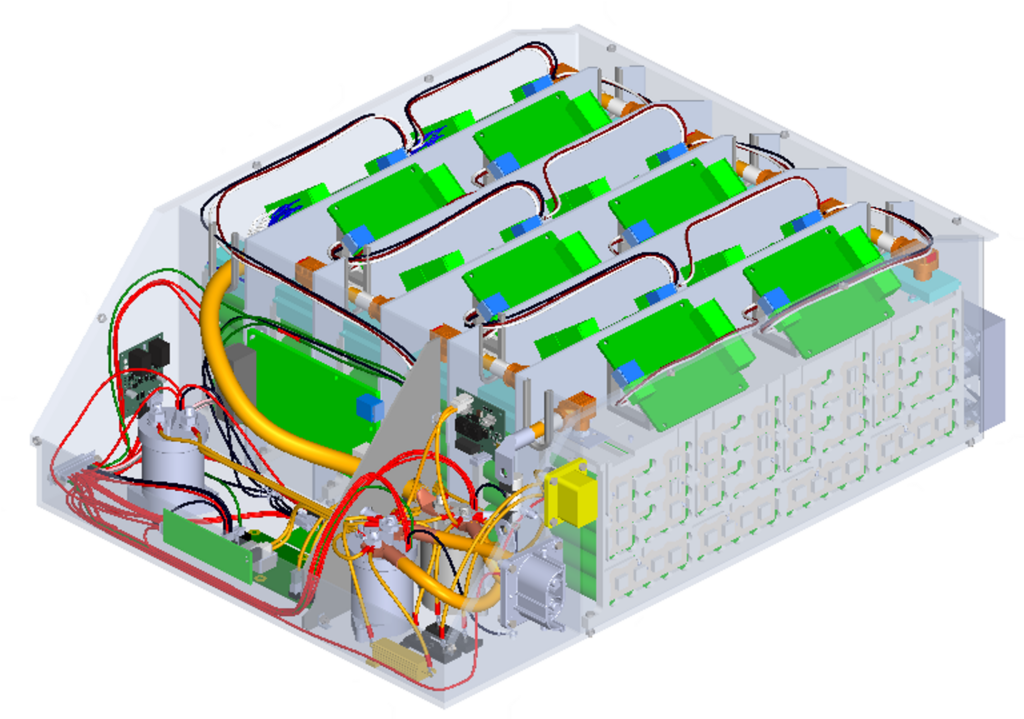
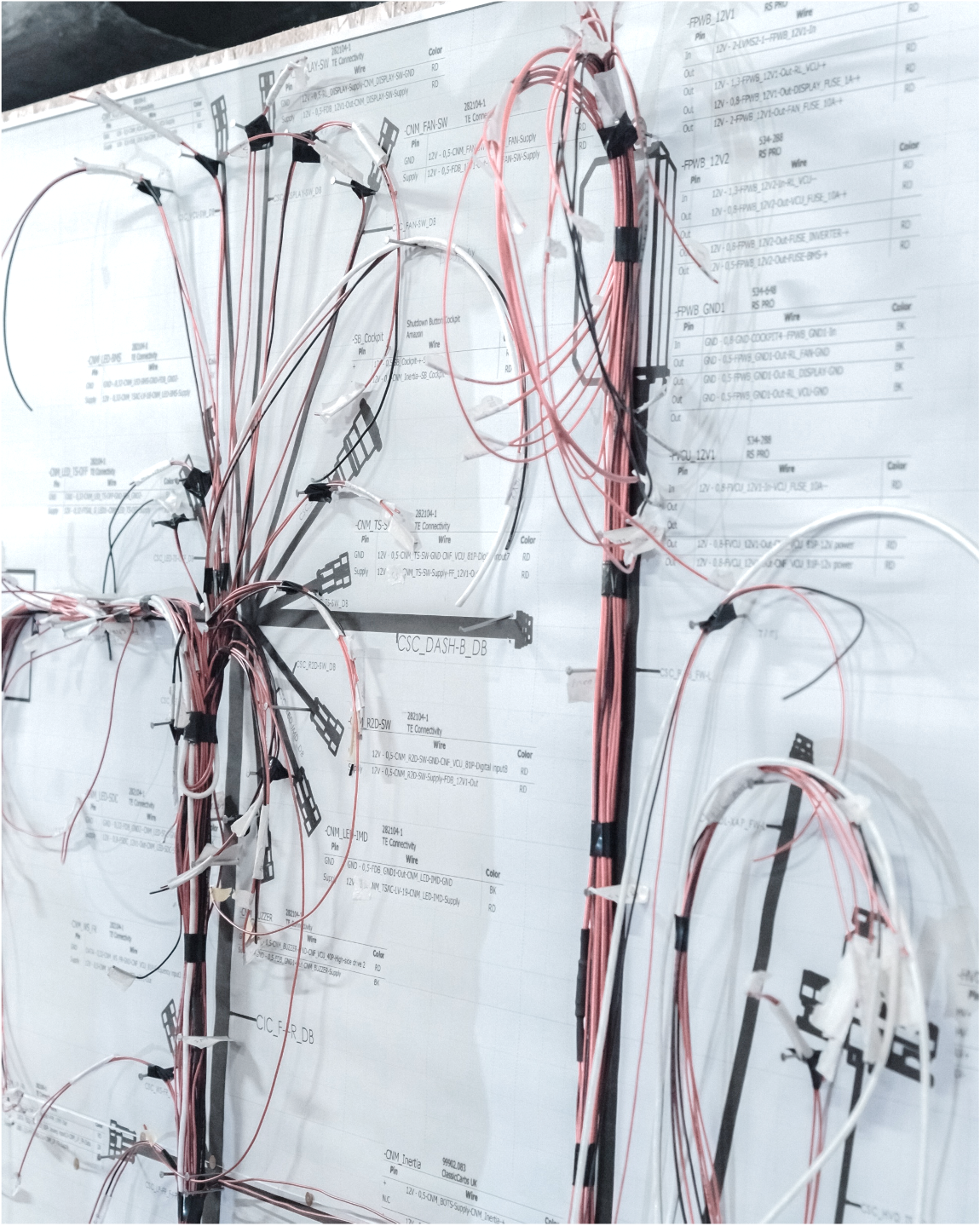
Integrating an electric powertrain exponentially increased the complexity of our wiring network. For the first time in the team’s history, we created a complete 3D model of the wiring harness to optimize lengths and prevent integration issues within the chassis. Manufacturing it required building a custom 3.5m x 1.5m wiring board. The generational leap is staggering: we went from 230 meters of cables on the EC-04 EVO to a total length of 510 meters for the EC-05, bundling 1150 wires and connecting 23 sensors.

Suspension & kinematics

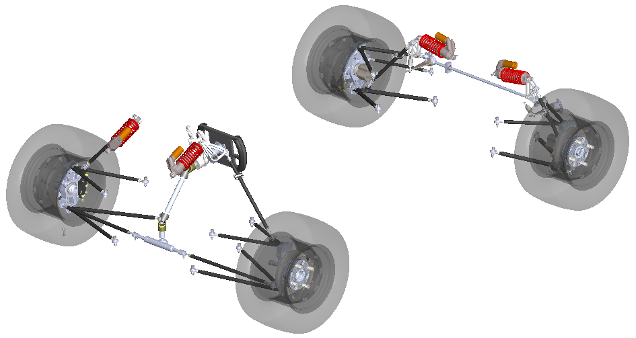
The shift to electric power required a complete overhaul of our vehicle dynamics to develop a sound and exploitable baseline on the track. The department designed a new suspension kinematics system, coupled with the very first custom-made damping system. Thanks to the massive use of simulation tools and the development of a data-driven tire model, we were able to increase reliability while drastically reducing unsprung mass, achieving just 9.5 kg at the front and 10 kg at the rear per wheel. This pursuit of performance is also highlighted by the integration of additive manufacturing for the topological optimization of our steering mount, marking a true technological breakthrough for the team.

Chassis

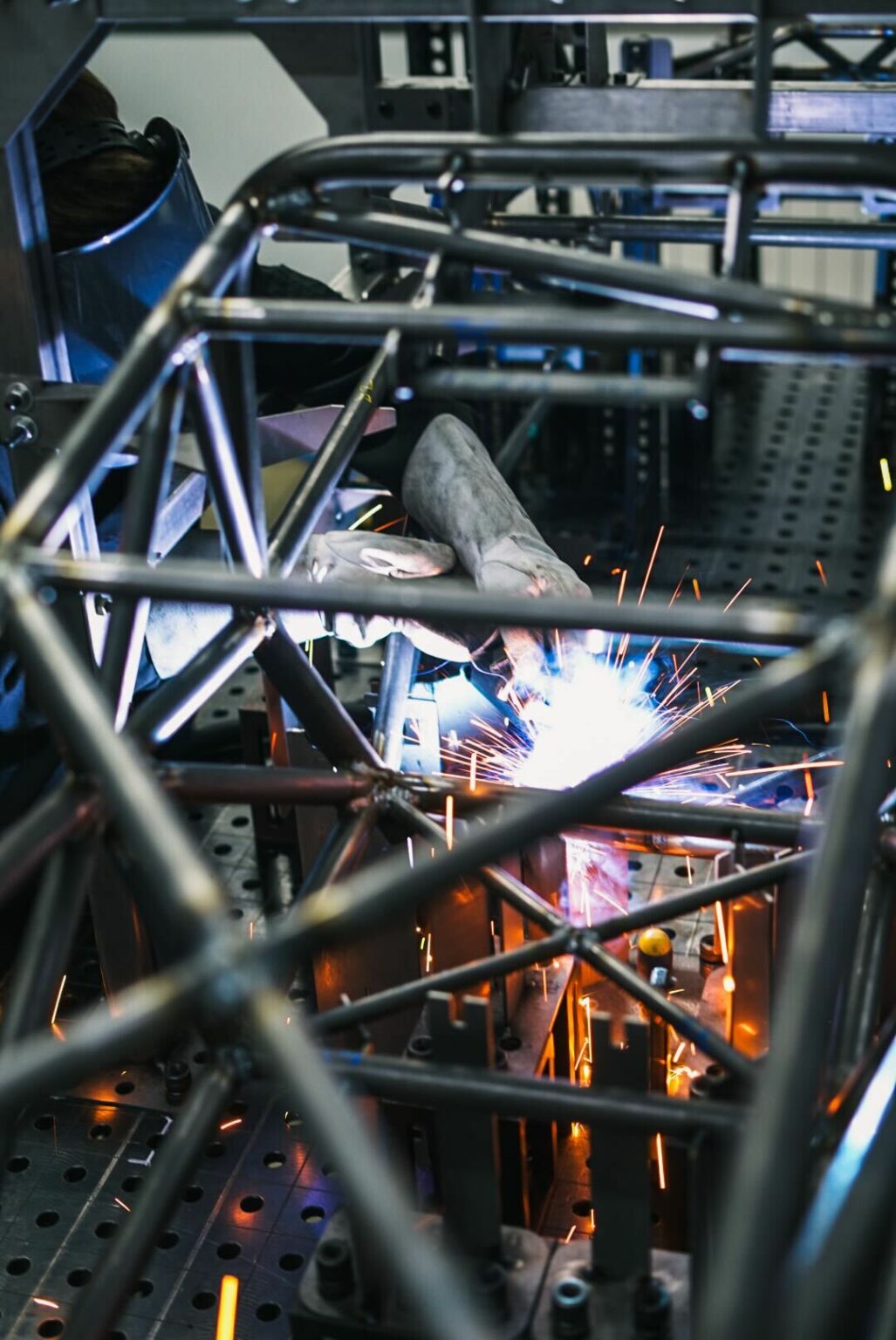
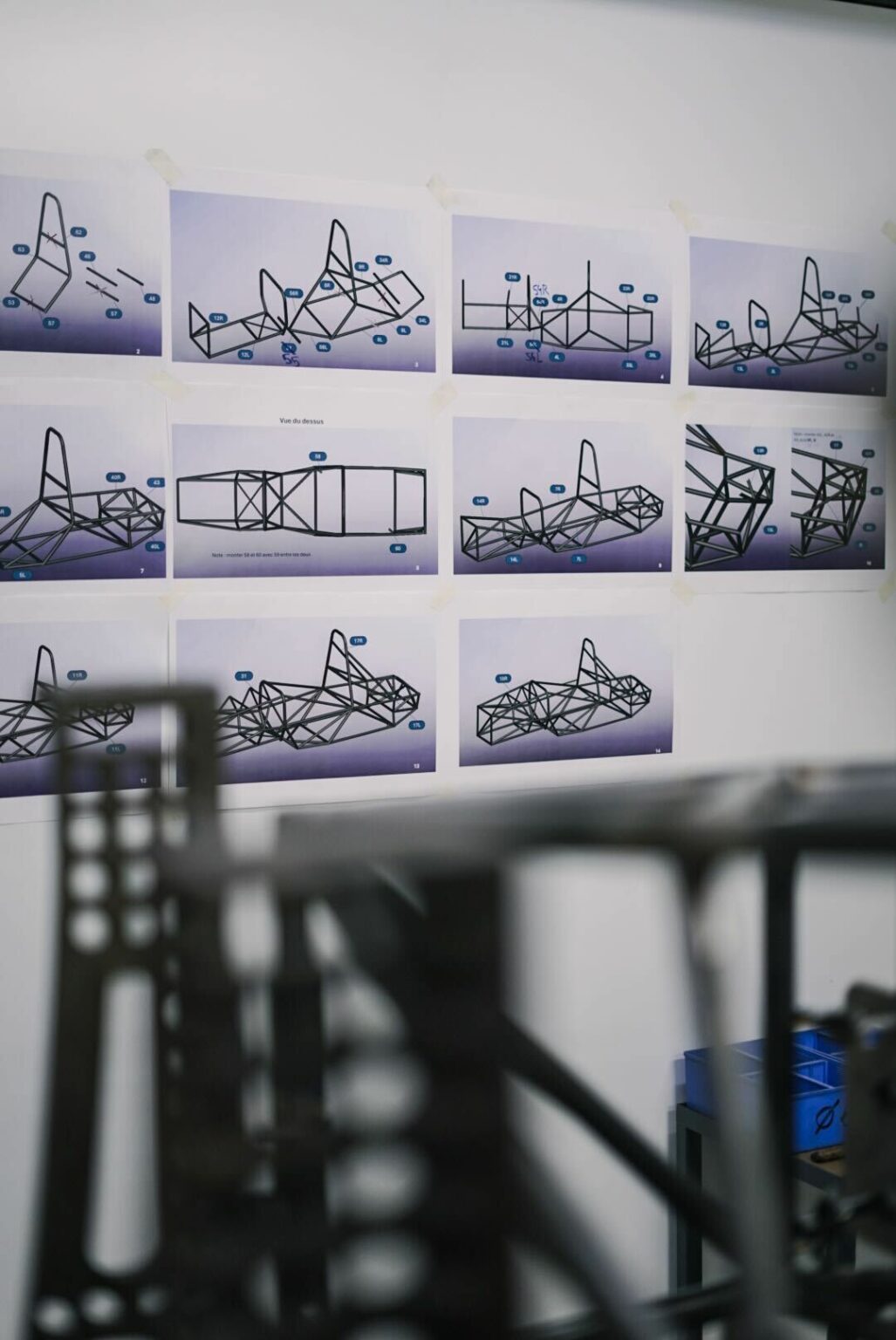
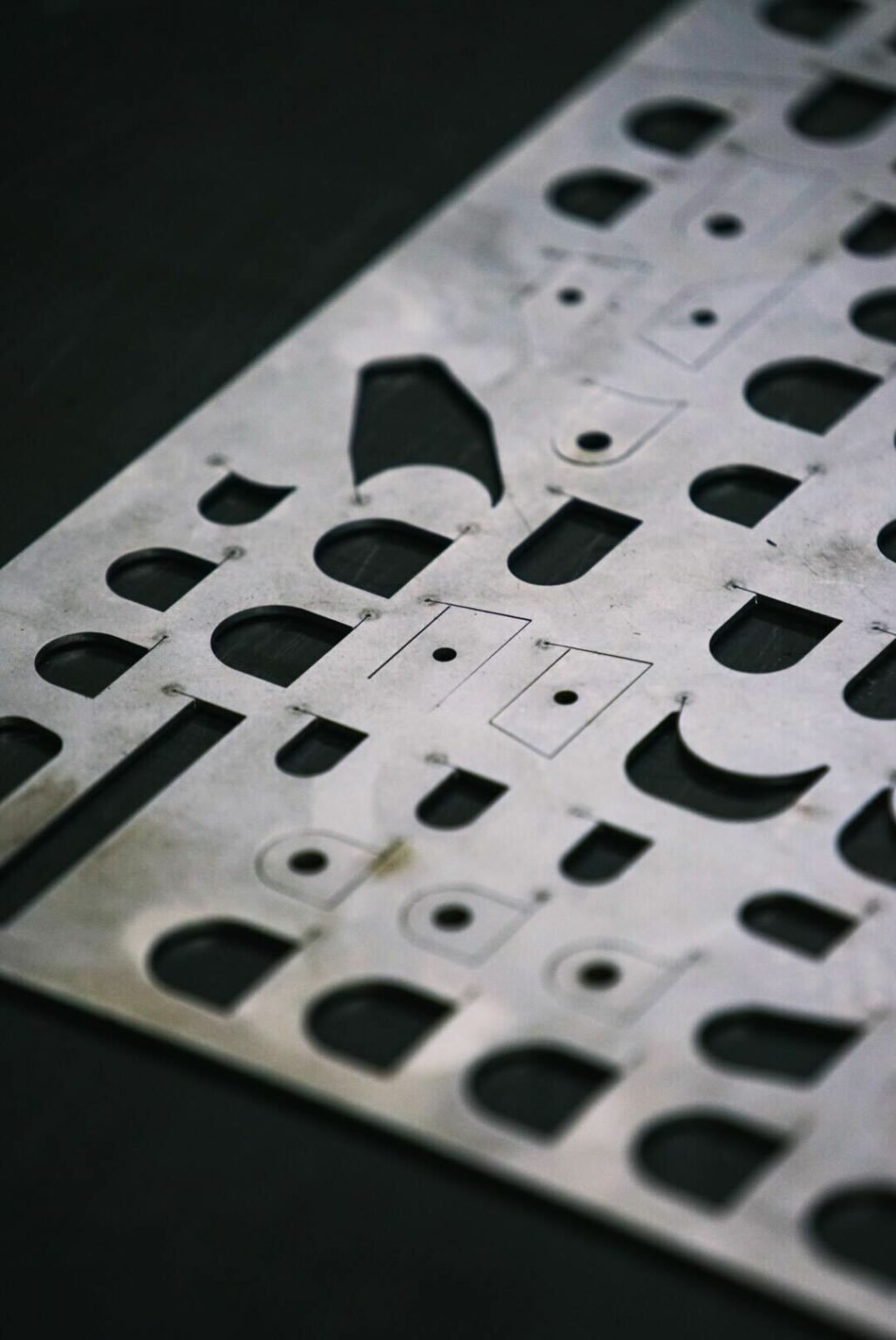
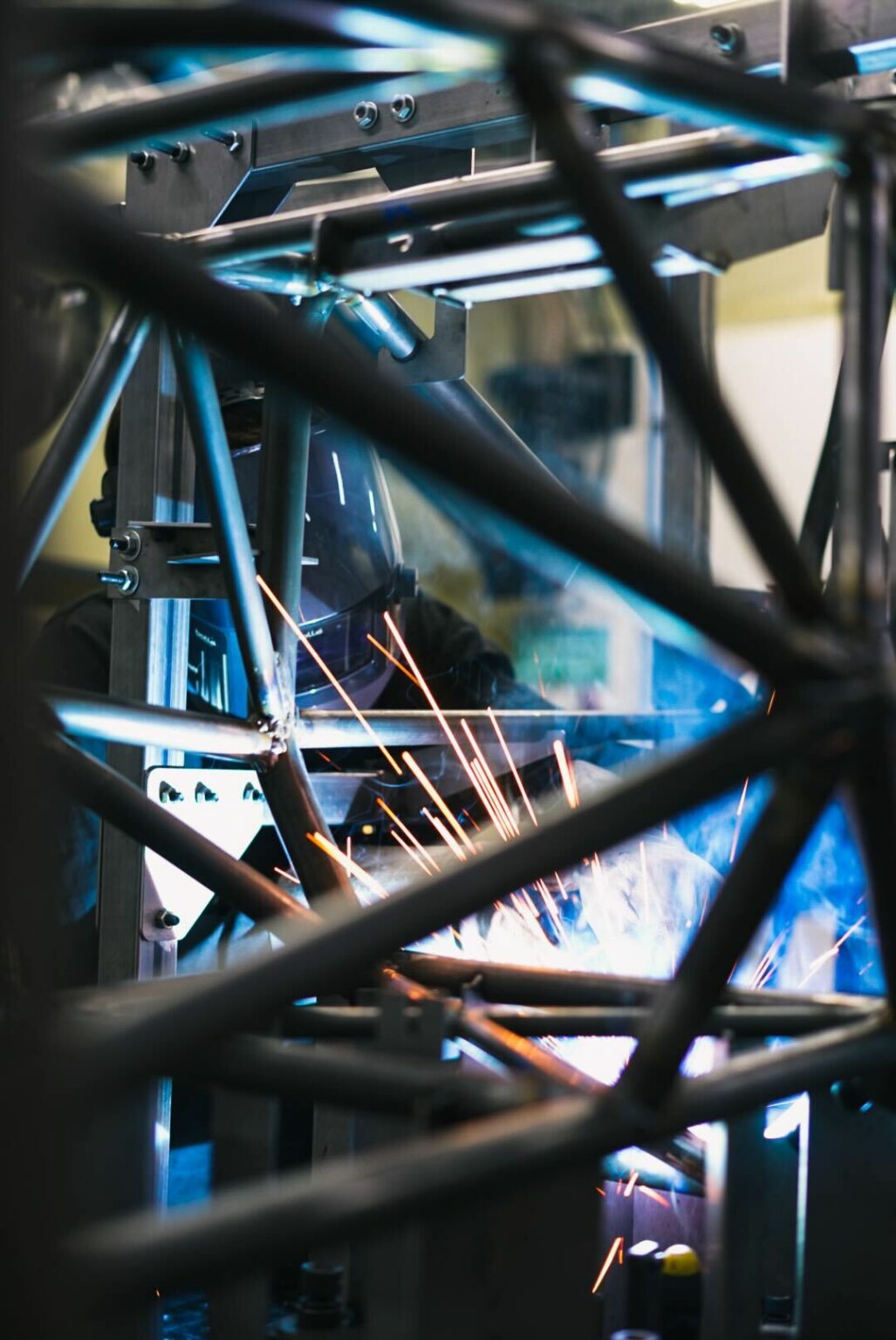
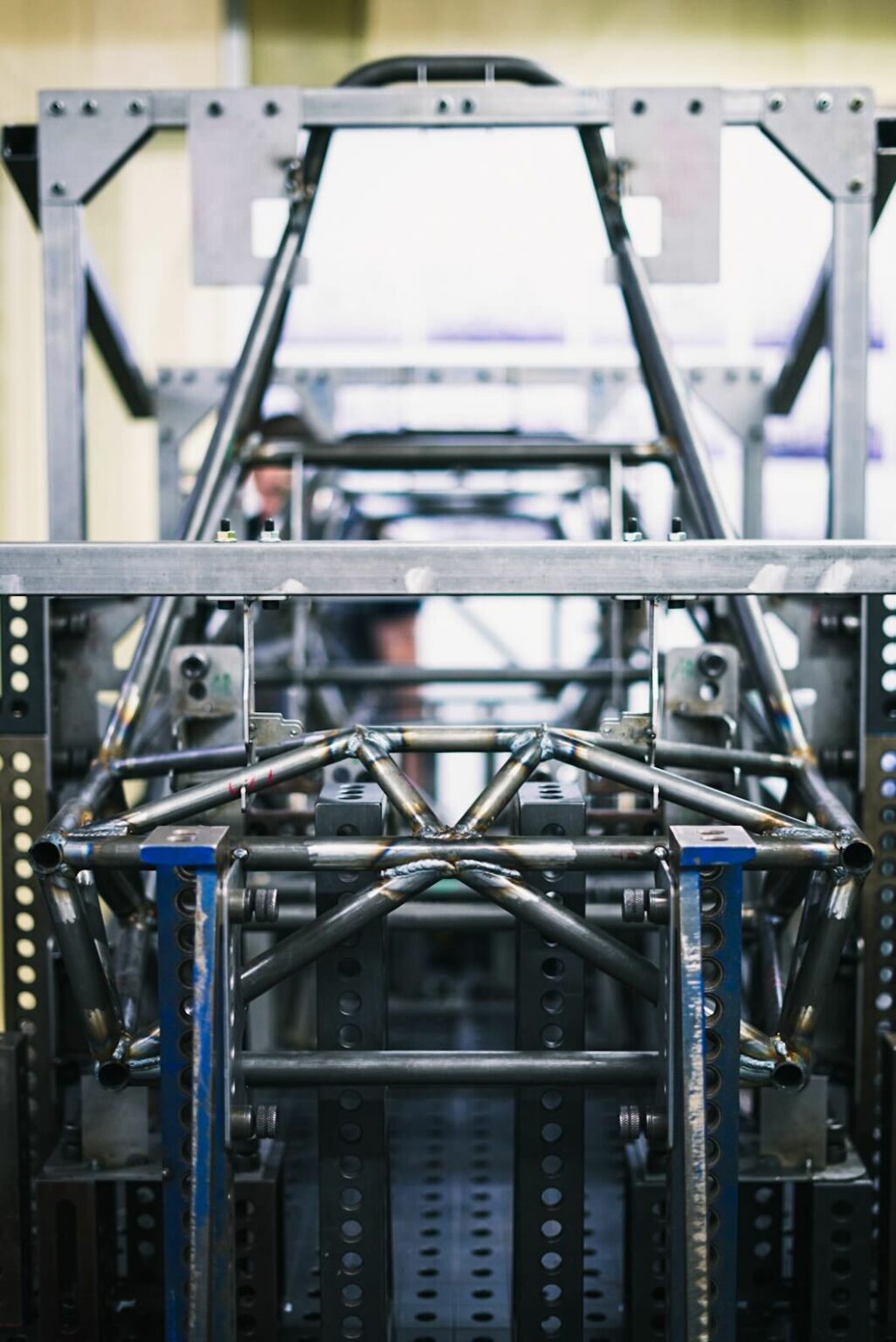
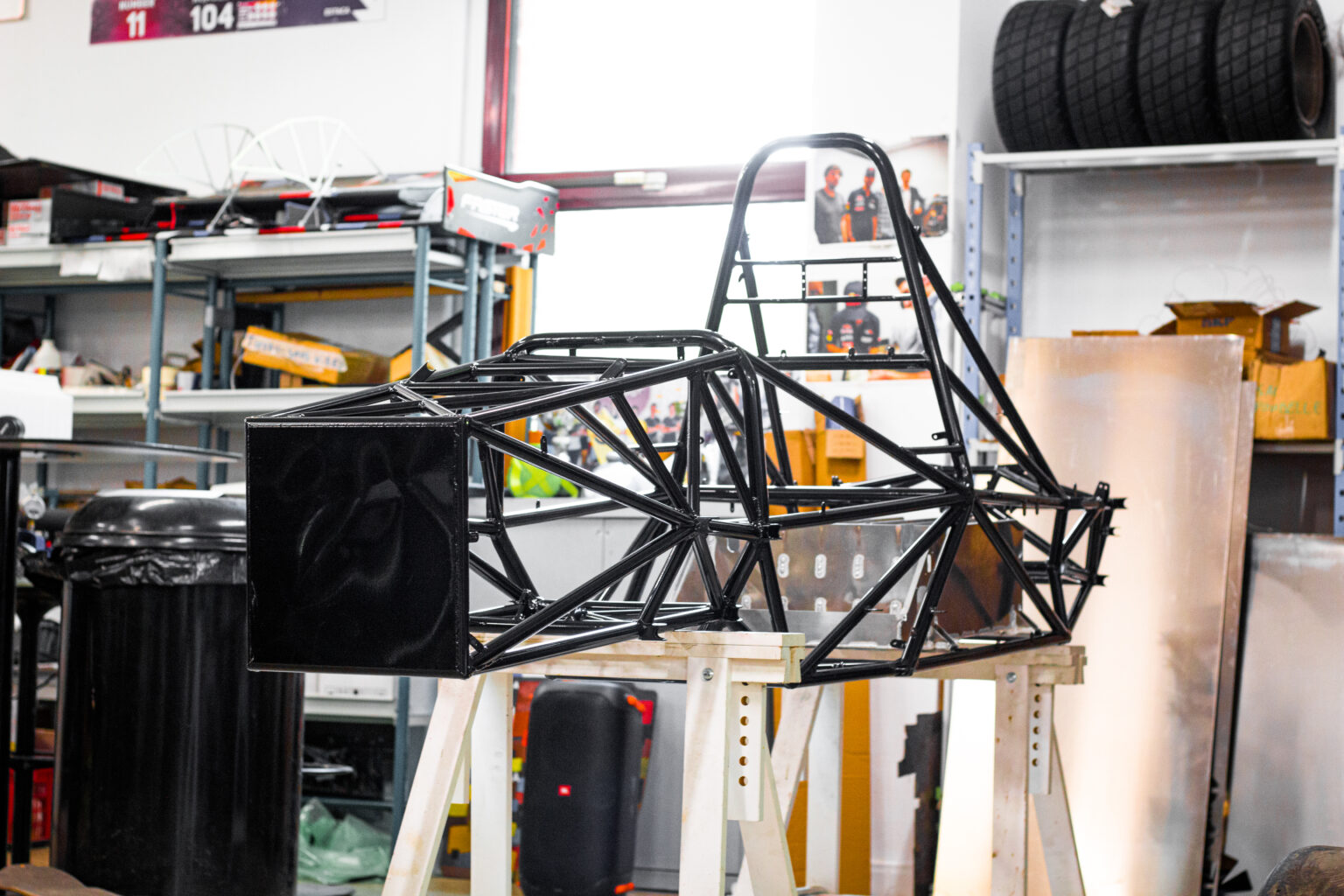
This energy transition imposed a radical change for the tubular chassis, with the guiding principle being the integration of the electric powertrain and the new suspension systems. The main objective was to meet new stiffness requirements, which necessitated optimized and automated finite element torsion simulations to dictate the new geometry. The result is spectacular: torsional stiffness now reaches 2950 Nm/deg, for a contained mass of 46 kg. The design process was pushed further with roll modeling to analyze the chassis’s impact on overall dynamic performance and guide our future designs. Manufacturing this spaceframe required fitting and cutting 104 tubes, assembled using a custom jig comprising over 350 parts to ensure perfect positioning during welding. Finally, the driver interface was completely reworked with a 3D-scanned carbon fiber seat molded to our drivers, a steering wheel with revised ergonomics, and a pedal box that simplifies position adjustments while integrating new rotary potentiometers.

Torsion stiffness
0 Nm/°
Laser cut tubes
0
Fixture parts
0

Aerodynamics

The EC-05 marks the completion of an ambitious concept, becoming our first single-seater featuring a full aerodynamic package made entirely of carbon fiber. Building on the solid foundation of the EC-04 EVO, we integrated major new developments, most notably the increased complexity of the undertray and sidepods. Extensive use of computational fluid dynamics allowed us to sculpt and optimize every airflow around the car. The team mastered the entire production chain in-house, from mold preparation and rigorous layup phases to final trimming. On the track, the numbers validate this precision work: the kit generates 109 kg of downforce at 72 km/h (20 m/s) with a total mass of just 12.1 kg. Overall efficiency has taken a massive leap, with a lift coefficient reaching 4.38 and drag reduced to 1,53 boosting the vehicle’s aerodynamic efficiency to 2.86—a spectacular 43% improvement over the previous model.

Scroll to Top